

This article is general information, not medical advice. If stress or anxiety is affecting your daily life, please speak to your GP.
PC8, also called Lao Gong or Pericardium 8, is the acupressure point at the centre of the palm. Curl your hand into a loose fist and it sits where the tip of your middle finger lands. It has been used in acupressure tradition for over a thousand years as a place to settle and slow down, and it is the point that hand-held calm devices are built around, including ours.
We make one of those devices, so read this as an interested party writing about its own subject. That is exactly why the evidence section below quotes the reviews rather than paraphrasing them in our favour, and why it says plainly where the research runs out.
What is the PC8 acupressure point?
PC8 is an acupoint in the middle of the palm. Its Chinese name, Lao Gong, is usually translated as Palace of Toil, a nod to the working hand. In Traditional Chinese Medicine it belongs to the pericardium meridian, and pressing it is described as regulating the flow of Qi, the life force energy that meridians are said to carry.
That is a traditional framework rather than a description of physiology as Western medicine understands it, and the two are worth keeping apart. What is fair to say is that the point has a long documented history, over a thousand years of it, and that it is easy to reach on yourself. That is a large part of why it turns up in so many self-care instructions, and in so many products.
Where is the Lao Gong point in your palm?
Make a loose fist. The spot your middle fingertip touches is PC8. Open your hand again and it sits in the centre of the palm, between the second and third metacarpal bones and slightly towards the third. It is in the soft, fleshy middle of the palm, not the hard heel near the wrist and not up in the finger pads.
If you are not certain you have found it, press around slowly with the pad of your opposite thumb. Most people find one spot that feels distinctly more tender, or simply more present, than the skin on either side of it. That is the one.

How do you press the PC8 point?
Use the pad of the opposite thumb with steady pressure rather than a jab, firm enough to feel clearly but never enough to hurt. The usual instruction is one to three minutes per hand, with slow breathing alongside, then swap. Stop if it becomes painful, and skip it over broken or irritated skin.
- Rest one hand palm-up in your lap or on a table so your arm is supported.
- Find the point with the loose-fist trick.
- Press with the opposite thumb, either held steady or in small slow circles.
- Breathe out for longer than you breathe in. Four counts in, six out is a common pattern.
- Give it one to three minutes, then swap hands.
One thing worth being honest about: a good part of what makes this feel calming is probably the breathing and the deliberate pause, not the specific square centimetre of skin. That is not a reason to skip it. It is a reason to keep expectations sensible. Pressing your own palm is the first of nine things to do with your hands we cover separately.

PC8 or PC6? They are not the same point
PC8 is in the palm. PC6, called Neiguan, is a different point on the inner forearm, roughly three finger-widths up from the wrist crease, between the two tendons. PC6 is the point associated with nausea and travel sickness, and it is the one acupressure wristbands target. If you are buying something for a journey, that difference decides which product you actually want.
| PC8 (Lao Gong) | PC6 (Neiguan) | |
|---|---|---|
| Where it is | Centre of the palm | Inner forearm, about three finger-widths from the wrist crease |
| How to find it | Loose fist, where the middle fingertip lands | Three fingers laid across the wrist, between the two tendons |
| Traditionally used for | Settling and slowing down | Nausea and travel sickness |
| Products that use it | Palm-held calm devices | Acupressure wristbands |
PC6 also has much the larger evidence base of the two. A 2025 Cochrane network meta-analysis of PC6 stimulation for postoperative nausea and vomiting concluded that invasive and non-invasive PC6 stimulation combined with anti-sickness medication may reduce nausea and vomiting and is likely to lower the need for rescue medication, while noting that the evidence on side effects is very uncertain. Nothing on that scale exists for PC8 and everyday stress. Our list of calm things to bring on a long flight sets out which of the two points does which job.
What does the research on acupressure show?
Mixed, and mostly not about everyday stress. The larger body of acupressure research sits in pain, nausea and sleep in clinical populations, usually hospital patients. There is a smaller anxiety literature with promising short-term results and real methodological problems. On PC8 specifically, for stress, there is very little.
Where there is something. A 2015 systematic review and meta-analysis in Acupuncture in Medicine reported that acupressure appears to give immediate relief of pre-treatment anxiety in adults, at a medium effect size. The same authors flagged substantial heterogeneity across the five pooled trials and called for better reporting of allocation concealment, which is a polite way of saying the studies were not all built the same way. A 2025 review in Nursing and Health Sciences found that acupressure improved sleep quality among hospital inpatients, and its authors were just as clear that the evidence is limited and that no optimal protocol can yet be recommended.
What the national body says. The US National Center for Complementary and Integrative Health reports that the best evidence for the acupuncture family of practices sits in pain conditions such as back and neck pain, knee osteoarthritis and migraine, mostly in adults, and notes that relatively few complications have been reported. On anxiety it is more cautious again, saying that some limited evidence suggests acupuncture may help reduce anxiety symptoms, but that the overall quality of the studies is low.
Why this is hard to study. You know whether something is pressing on your hand. A sham acupressure control usually means pressing a different spot, which is not a real placebo, so expectation cannot be stripped out of the result. Anyone quoting you a clean number on acupressure and stress is skating over that.
And on PC8 itself. A 2025 cadaveric study in Complementary Therapies in Clinical Practice mapped the tissue layers under the point and identified a branch of the median nerve and the deep branch of the ulnar nerve at PC8. That tells you what is under the skin there. It does not tell you that pressing it relieves stress, and those two statements are worth keeping apart, because a lot of marketing does not bother. We took the same line in our honest look at whether acupressure works for kids, and in a companion piece on whether a calming device helps you sleep.
Where a CalmCarry device fits in
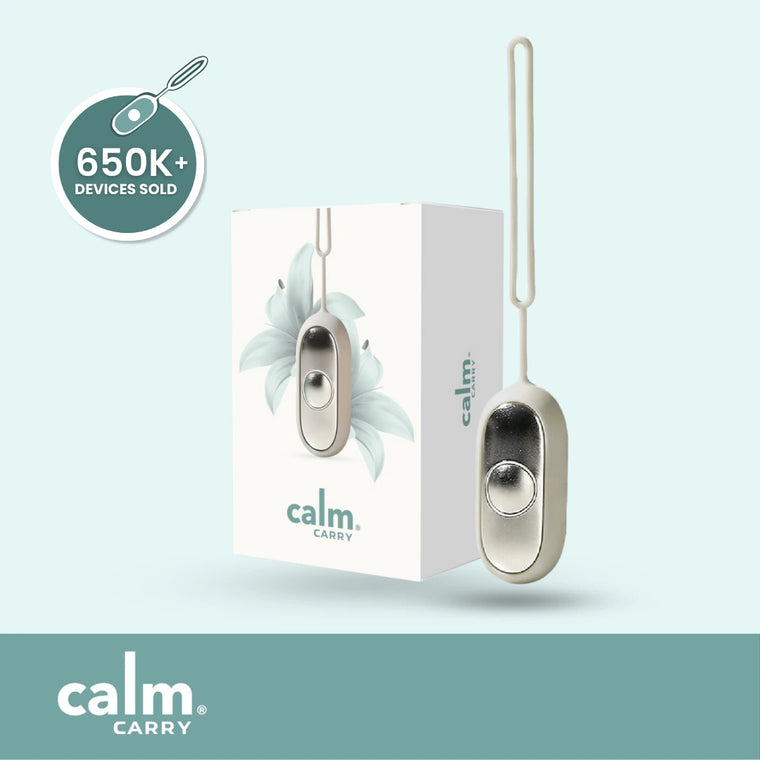
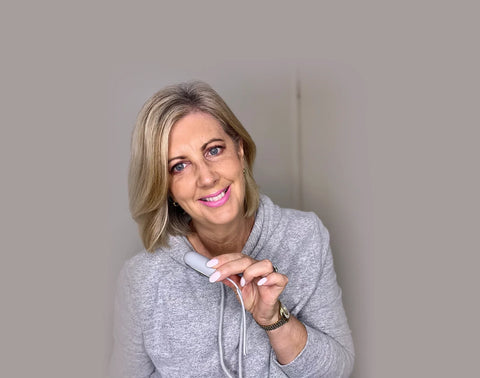
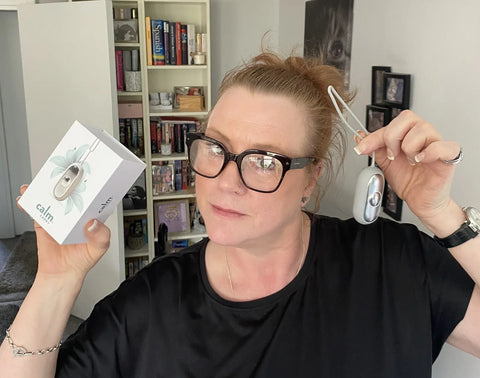
CalmCarry is a palm-sized device that sends a very low microcurrent pulse to the PC8 point, so you can hold it rather than press with your thumb. You feel it as a soft pulse or tingle, not a vibration, and there are eight levels so you can start on the lowest.
The sensation is a soft pulse, like a tiny heartbeat. The honest case for it over your own thumb is not that it does something your thumb cannot. It is that it keeps going without effort, it does not ask you to remember a count, and holding it gives you a reason to sit still for a few minutes, which is the part most people skip. It is a comfort tool and a prompt to pause, not a treatment for anything. It is recommended by therapists, more than 650,000 families have bought from us, and our reviews average 4.9 out of 5.

The kids version and the adult CalmCarry device use the same palm point and differ in size and intensity. For where either one sits among everything else you could reach for, see our guides to the top calming tools for children and the calming tools adults keep using.
Who the palm point is not for
Skip PC8 pressure, by thumb or by device, if you have broken skin, a rash, a recent hand injury, or nerve pain, numbness or tingling in the hand. If you are pregnant, acupressure is a common area of caution, so ask your midwife or GP before starting anything new.
Skip it too if what you really want is proof. Nobody can honestly tell you PC8 is proven for stress, and if a strong evidence base is your bar, this will not clear it and you should keep your money. And if stress or low mood is affecting your sleep, your work or your relationships most days, a point in your palm is not the answer to that. A GP is.
Common questions about PC8
What is the PC8 point?
PC8, or Lao Gong, is the acupressure point at the centre of the palm, where the tip of your middle finger lands when you make a loose fist. It sits on the pericardium meridian in Traditional Chinese Medicine and has been used for over a thousand years as a point for settling and slowing down.
Is PC8 the same as Pericardium 8?
Yes. PC8, P8, Pericardium 8 and Lao Gong all name the same point. Older texts also call it Palm Centre or Palace of Toil.
How long should I press the PC8 point?
One to three minutes per hand is the usual instruction, with steady pressure and slow breathing. There is no evidence-based dose here, so comfort is the guide. Stop sooner if it feels sore.
Is PC8 the point acupressure wristbands use?
No. Wristbands target PC6, Neiguan, on the inner forearm about three finger-widths above the wrist crease. That is the nausea and travel-sickness point. PC8 is the palm point.
Does pressing PC8 actually work for stress?
Honestly, nobody knows. Acupressure has a small, mixed evidence base that sits mostly in pain, nausea and clinical sleep rather than everyday stress, and the studies are hard to blind. Plenty of people find a few slow minutes with their palm calming, and that is a fair thing to expect. Proof is not.
If a quiet couple of minutes with your palm is already part of how you wind down, a device built around the same point makes it easier to keep doing. Get CalmCarry and see whether the pause sticks.