

The safest sleep support supplement that works without melatonin grogginess is typically a melatonin-free, hormone-free formula that supports your nervous system rather than forcing sedation.
For the wider picture of gentler options, our guide to what to give kids instead of melatonin walks through routines, supplements and calming tools. If the fog is really a scheduling problem rather than a supplement one, our 40-minute school morning routine shows where the lost minutes actually go.
Here is the framework we use to help you choose with less trial and error:
- Separate “can’t fall asleep” from “can’t stay asleep,” because the support you need is different.
- Use an ingredient cheat sheet to avoid morning fog, especially when a hormone-based approach is the wrong fit.
- Vet the label like a quality auditor: third-party testing, GMP manufacturing, and no proprietary blends hiding the real dose.
- Get timing right so you can wake up clear, then evaluate your results over 2 to 4 weeks and adjust safely.
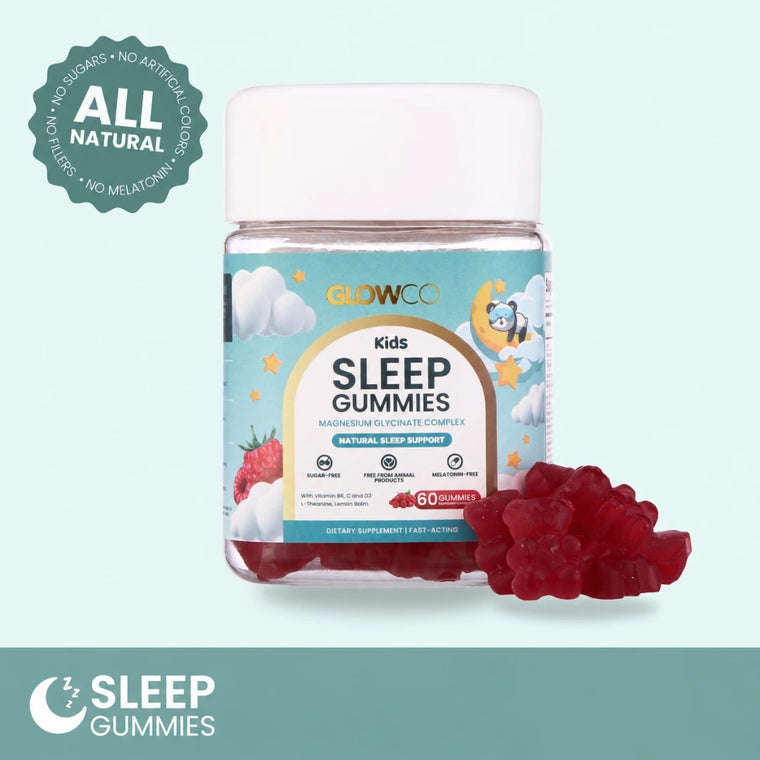
At Glowco, we built our magnesium glycinate sleep gummies for kids who are wired at bedtime, not “broken.” Our formula is 100% melatonin-free and hormone-free, with 100 mg of time-release magnesium glycinate to support calm and all-night rest without morning grogginess being the tradeoff.
Start by spotting your sleep pattern, because the best sleep support supplement is the one that matches what is actually happening in your night, not what is trending on a label.
Start with your sleep pattern, not the hype
The best sleep support supplement without morning grogginess is the one that matches your actual sleep pattern. Start by naming your problem clearly, then choose ingredients and product quality signals that fit.

If you cannot fall asleep, ask what is keeping you “on”
Trouble falling asleep usually points to a nervous system that is still switched on, not a need to be knocked out. Your goal is calm, not sedation, because sedating products are more likely to leave you foggy the next day.
In our experience, kids and adults get stuck here for a few predictable reasons: a late second wind, stress and rumination, screen time close to bed, or simple overstimulation after a busy day. Another overlooked factor is nutrition. Low magnesium intake can show up as restlessness, muscle tension, and a hard time settling.
You can narrow it down fast by tracking what your evenings look like for 3 to 5 nights, then choosing support that matches the pattern.
- If your mind is racing: prioritize a consistent wind-down routine first, then consider calming nutrients
- If your body feels “wired”: look at caffeine timing, exercise timing, and magnesium intake
- If bedtime battles are the main issue: focus on predictable cues (bath, book, lights out) before adding any supplement
When you treat the “on” switch, you are more likely to fall asleep without paying for it with next-day grogginess.
If you fall asleep but wake up, think steadiness
Staying asleep is a different problem from falling asleep, so the best sleep support supplement without morning grogginess often looks different here. You are usually aiming for steadier overnight support, not a strong front-end hit that wears off.
Common drivers include an inconsistent sleep schedule, late eating or drinking, stress that shows up at 2 a.m., or a bedroom environment that is too warm, bright, or noisy. Some people also notice more wakeups when they use ingredients that are sedating at first but fragment sleep later.
Before you switch products, check the basics that specifically affect maintenance: fluid timing, room temperature, and whether your routine changes a lot between weekdays and weekends.
When supplements are not the main answer
Some sleep patterns signal that you should not rely on supplements alone. If your sleep is deteriorating fast, you feel unsafe, or your child’s daytime function is struggling, it is time to involve a clinician.
We also suggest extra caution if you are mixing multiple products, using alcohol to fall asleep, or taking medications that may interact with common sleep ingredients. A “natural” label does not guarantee a good fit for your situation.
Watch for these red flags, then keep reading for a simple ingredient-matching framework and a quality checklist so you can choose more confidently.
- Loud snoring, gasping, or breathing pauses
- Severe daytime sleepiness, new mood changes, or worsening anxiety
- Insomnia lasting weeks despite consistent routines
- Kids with persistent bedtime resistance plus daytime behavior or learning concerns
If any of these are true, a supplement can be supportive, but it should sit inside a bigger plan with professional guidance when needed.

Ingredient cheat sheet for low-grogginess sleep support
If you want sleep support without morning grogginess, look for ingredients that steady your nervous system instead of knocking you out. Your best choice depends on whether your challenge is winding down, staying asleep, or avoiding that foggy “hangover” feeling.
Magnesium glycinate: calm support, not a knockout
Magnesium glycinate is usually a good fit when you want calm, not sedation. It supports nervous system calming and can be especially relevant if low magnesium status is part of your sleep picture.
In our experience, this shows up as kids who are “tired but wired” at bedtime, have busy legs, or get overstimulated after an active day. You are not trying to force sleep. You are trying to lower the body’s resistance to sleep.
A 2024 systematic review found that five out of eight sleep-related studies reported improvements in sleep parameters with magnesium supplementation, with benefits more likely when magnesium status starts low. That is encouraging, but it is not a promise for every child or adult.
- Best match: trouble settling down, stress-driven restlessness, light sleep
- Why glycinate: generally well-tolerated and commonly chosen for bedtime
- Form matters: a time-release magnesium glycinate option can support steadier overnight coverage
Use magnesium glycinate when your goal is a smoother wind-down and fewer overnight disruptions, without the “knocked out” feeling that can linger into the morning.
Why melatonin can feel rough in the morning
Melatonin can help some people with timing, but it can also create morning drag if the dose is higher than you need, the timing is off, or your body is already making enough. That “sleep hangover” is one reason families look for a melatonin-free sleep supplement.
With kids, we also see parents wanting to avoid a hormone-based approach when the bigger issue is overstimulation or a too-late second wind. Another practical concern: gummy label accuracy is not always reliable, so what you think you are giving may not match what is in the bottle.
If you have tried melatonin before, you did not do anything wrong. It just may not match your goal of clear mornings and consistent sleep patterns.
Sedating antihistamines: higher fog risk
Sedating antihistamines tend to be the most likely to cause next-day fog. They can help you feel drowsy, but that is not the same as improving sleep quality.
They also come with more tradeoffs, especially for regular use, including hangover effects and impaired thinking. That matters if you need to function at school, work, or during early-morning parenting.
If you are deciding between options, antihistamines are better viewed as occasional tools, not a long-term sleep plan. If you are using them often, it is worth discussing safer strategies with a clinician.
Quality checklist that predicts fewer side effects
If you want the best sleep support supplement without morning grogginess, you need more than a trendy ingredient list. Quality signals predict how consistent and tolerable a product is.
Third-party testing and GMP are non-negotiable
The simplest way to reduce surprises is to choose brands that can show serious quality controls, not just marketing. Third-party testing and GMP manufacturing are two of the clearest signals.
In our experience, side effects often come from inconsistency: the product does not match the label, or batches vary. GMP standards help tighten manufacturing controls, while third-party testing is your best outside check that what is listed is what you are actually getting.
- Look for clear statements about third-party testing, not vague “tested for quality” language
- Look for GMP manufacturing, ideally with a willingness to answer questions about batch processes
- Avoid brands that won’t share even basic testing or manufacturing details when you ask
You are not looking for perfection. You are looking for transparency and repeatability, because those are what usually reduce unpleasant next-day effects.
Skip proprietary blends and fuzzy dosing
Dose clarity beats proprietary blends because you cannot match the product to your sleep pattern if you do not know what you are taking. Clear labeling also makes it easier to spot overlap with other supplements.
Proprietary blends can work, but they often hide the exact amounts, which makes troubleshooting harder if you feel wired, overly calm, or just off the next morning.
For kids sleep gummies, we like seeing a specific amount per serving. For example, Glowco Magnesium Glycinate Sleep Gummies list 100 mg of time-release magnesium glycinate per serving, and the formula stays melatonin-free and hormone-free.
Time-release can support all-night sleep
If your issue is staying asleep, time-release matters more than most people realize. Fast-release products may help at bedtime but fade before the early-morning hours.
A time-release formula aims to deliver magnesium gradually, which can be a better fit for nighttime awakenings tied to overstimulation. It is also a practical way to avoid taking multiple doses at night.
Your move: choose time-release when awakenings are the problem, then we recommend you evaluate results over a few weeks so you can separate a true trend from a single good night.
How to take a sleep support supplement for clear mornings
To avoid morning grogginess, focus on timing, keep your routine consistent, and change only one variable at a time so you can tell what helps.
Timing that prevents morning fog
The simplest way to protect clear mornings is to take your sleep support supplement early enough to work, but not so late that it overlaps with wake-up time. You want support for settling down, not a “hangover” effect.
With magnesium glycinate sleep gummies, we see families do best with a consistent schedule: two gummies about 30 minutes before your child’s intended bedtime, chewed thoroughly, then lights out. A time-release magnesium glycinate formula can also help if your main issue is staying asleep, because it is designed for gradual release rather than a quick spike.

- Pick one bedtime and keep it steady for at least 2 weeks
- Avoid adding a new supplement on nights when bedtime is already late
- If wake-ups are the problem, prioritize a time-release formula over a “knockout” approach
Your goal is predictable support that fits your household rhythm. If mornings get harder, your timing is the first knob to turn.
Avoid common stacking mistakes
Stacking can create morning fog even when each ingredient seems “gentle” on its own. The risk is not just drowsiness, but not knowing which product is helping or hurting.
In our experience, parents get the cleanest read by starting with one melatonin-free sleep supplement and tracking sleep onset, nighttime awakenings, and morning mood. If you later add another tool, do it one at a time and give it several nights.
- Do not combine multiple new products in the same week
- Be cautious with sedating OTC antihistamines, especially before a work or school day
- Avoid alcohol with any sleep aid approach
Simple stacks are safer and easier to evaluate. If you cannot explain why each item is there, it is probably too much.
When to adjust or call your clinician
Stop or adjust if you see new morning sleepiness, stomach upset, or behavior changes that do not match your child’s baseline. A supplement should make mornings easier over time, not harder.
Call your clinician promptly if sleep issues are paired with loud snoring, breathing pauses, persistent restless legs, or significant daytime impairment. Also check in before starting if your child takes prescription medications or has a chronic condition.
If you want a straightforward starting point, we designed Glowco Magnesium Glycinate Sleep Gummies to be melatonin-free and hormone-free, with time-release magnesium glycinate. Use them nightly for a few weeks and reassess with your notes.

Choose a sleep support supplement that supports clear mornings
If you want a sleep support supplement without morning grogginess, start by matching the ingredient to your pattern. Trouble falling asleep often looks like a wired nervous system. Waking through the night can point to a different support and a different formula.
That is why we made Glowco Magnesium Glycinate Sleep Gummies. They are a melatonin-free sleep supplement and hormone-free sleep gummies option, built around a time-release magnesium glycinate delivery system to support calmer evenings and steadier nights. You give your child two gummies about 30 minutes before bedtime, then keep the routine consistent and track sleep onset and nighttime awakenings for 2 to 4 weeks.
If you are ready to test a simple, low-fog approach, start with the 1-Pack. If it helps, move to the 3-Pack or Subscribe and Save for better value. If your child has a medical condition or takes medication, check with your clinician first.
Frequently Asked Questions
QWhy are Glowco Sleep Gummies melatonin-free?
AMelatonin is a hormone, and many families prefer to avoid hormone-based sleep aids for kids when they are trying to support natural sleep patterns. We also take label accuracy seriously, and data shared in our materials notes that 88% of melatonin gummies contain inaccurately labeled doses. Glowco Magnesium Glycinate Sleep Gummies focus on magnesium glycinate to support nervous system calming, which can be a better fit when your goal is sleep support without a heavy, sedated feeling the next morning.
QHow quickly will my child fall asleep after taking these gummies?
AOur routine guidance is two gummies about 30 minutes before your child’s intended bedtime, chewed thoroughly, paired with a consistent wind-down routine. In a consumer study shared in our materials, families reported 45% faster sleep onset and 60% fewer nighttime awakenings, but results vary by child and by the root cause of sleep disruption. We suggest tracking bedtime, time to fall asleep, and awakenings for 2 to 4 weeks so you can judge the trend, not just one night.
QWhat form of magnesium is in these gummies and why does it matter?
AWe use magnesium glycinate, a form known for strong bioavailability and a generally gentle profile, which matters when you are trying to support sleep without next-day fog. Glowco Magnesium Glycinate Sleep Gummies also use a time-release delivery system, designed to release magnesium gradually to support sustained sleep through the night. If your main issue is staying asleep, that time-release approach can be a practical difference compared with faster, short-acting options.