

This article is general information for parents, not medical advice. Acupressure is a comfort practice, not a treatment for any medical condition. Talk to your GP or paediatrician about any health concern.
The honest answer: acupressure has a very long tradition and a small, mixed evidence base in children, with the strongest research sitting in hospital settings around procedural discomfort and nausea rather than everyday calm. It is generally considered low-risk because nothing is ingested and nothing pierces the skin. What it is not is a proven treatment, and any brand telling you otherwise, including one selling an acupressure device, is overreaching. We make one, so here is the version with the caveats left in.
What acupressure actually is

Acupressure applies steady physical pressure to specific points on the body. It shares its map with acupuncture but uses fingers or a small tool instead of needles, which is why it travels well into homes and children's routines. The point our own device sits on is PC8, also called Lao Gong, in the centre of the palm, a spot used in acupressure tradition for over a thousand years. Our explainer on the PC8 point covers the tradition in more detail.

What the research says, and does not
Two things are true at once here, and most articles on this topic only tell you one of them.
Where there is genuine research: the strongest pediatric work looks at hospital contexts. Reviews have examined acupressure for procedural discomfort in children, for example around needles and medical procedures, and for nausea. The US National Center for Complementary and Integrative Health reports the best evidence for the acupuncture family of practices in pain conditions such as back and neck pain, knee osteoarthritis and migraine, mostly in adults, and notes that relatively few complications have been reported. Some children's hospitals, including Rady Children's Health, offer acupuncture and acupressure within integrative programmes and teach families self-care techniques.
Where the evidence thins out fast: studies in children are fewer, smaller and hard to blind, since a child usually knows whether something is pressing on their hand. There is no good body of research showing acupressure improves everyday bedtime settling or big feelings at home. Anyone claiming a proven effect there is going beyond what exists.
Why it may still help at bedtime
Here is the mechanism we think is honest, and it has nothing to do with curing anything. A restless child at bedtime is looking for somewhere to put their attention and their hands. A small object that gives steady, repetitive physical feedback does two useful jobs: it gives the hands a task, and it becomes a cue, the same object at the same point in the same routine every night. Predictability is the part that does the heavy lifting; the tool makes the predictability tangible.
That is the same reason white noise, a favourite blanket or a nightly story works. None of them are treatments. All of them can make a routine easier to run, which is a genuinely useful thing.
Is it safe for children?
- Nothing is swallowed and nothing pierces the skin, which removes the main categories of risk that come with supplements and needles.
- Pressure should be gentle. Comfortable, never painful. If a child dislikes it, stop; a tool they resist is the wrong tool.
- Small parts and cords mean supervision for younger children, and following the product's age guidance.
- It should never delay proper care. Persistent pain, ongoing sleep trouble, or any worry about your child's health goes to your GP first.
How we talk about our own device

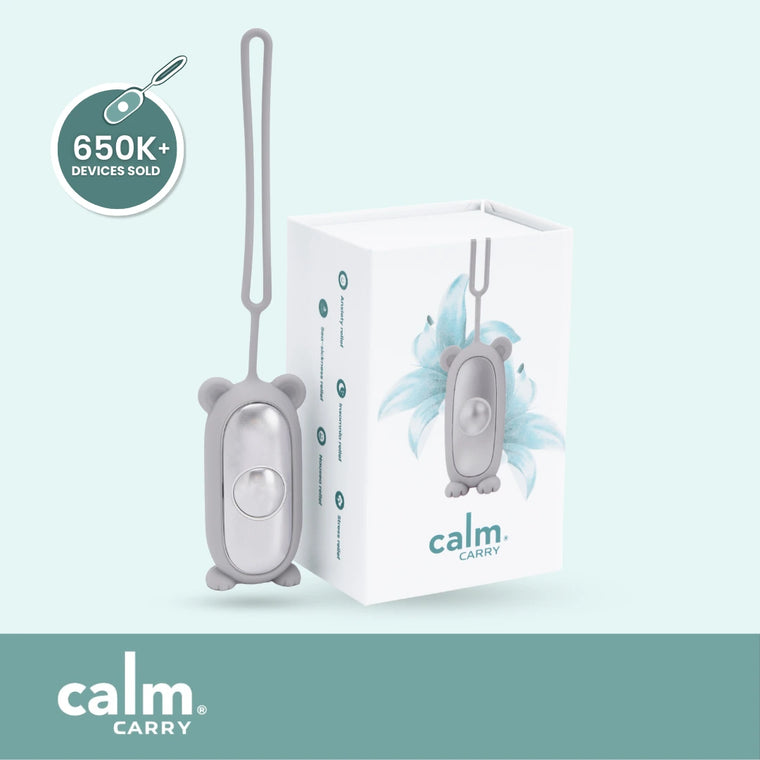
CalmCarry Kids is a small hand-held device that gives a soft pulse, like a tiny heartbeat, against the PC8 point in the palm, a spot used in acupressure tradition for over a thousand years. We describe it as a comfort tool that fits into a wind-down routine, because that is what the evidence supports us saying. It is recommended by therapists, over 650,000 families keep one, and families rate the brand 4.9 out of 5. What we will not tell you is that it treats a condition or replaces anything your doctor recommends.
Wondering whether it is worth it for your family? We answer that head-on in does CalmCarry really work?, including what it feels like and who it does not suit.
If you want the wider picture, our round-up of the best calming tools for kids puts devices alongside free options like breathing games and worry boxes, several of which cost nothing at all.
Common questions from parents
Is acupressure scientifically proven for children?
No. The research in children is limited and mixed, with the most studied uses sitting in hospital settings around procedural discomfort and nausea. Treat acupressure as a low-risk comfort practice with a long tradition, not as a proven treatment.
Is acupressure safe for a child?
It is generally considered low-risk when pressure is gentle, since nothing is ingested and the skin is not pierced. Follow any product's age guidance, supervise younger children around cords and small parts, and never let it delay proper medical care.
What is the PC8 or Lao Gong point?
A point in the centre of the palm used in acupressure tradition for over a thousand years. Its long history is why it is a common choice for hand-held tools, and tradition is exactly how we describe it.

Does an acupressure device help kids sleep?
Not as a sleep drug does. What a hand-held tool can do is give a child something to hold and a consistent cue inside a bedtime routine, and a predictable routine is the best-evidenced sleep aid there is. Our guide to melatonin alternatives for kids covers the rest of that toolkit.
If you are considering one for yourself rather than your child, see our calming tools round-up for adults.