

This article is general information, not medical advice. If stress is affecting your daily life or sleep over a long period, please speak to your GP.
The calming tools adults actually keep using share one quality: they give your hands and attention something to do while your body winds down. The seven below run from free to about fifty dollars, and they work best attached to a moment in your day rather than kept for emergencies. One is ours, declared upfront: we make CalmCarry, a hand-held calming device, so read our list knowing that and judge each tool on its own merits.
1. A hand-held calming device (ours)

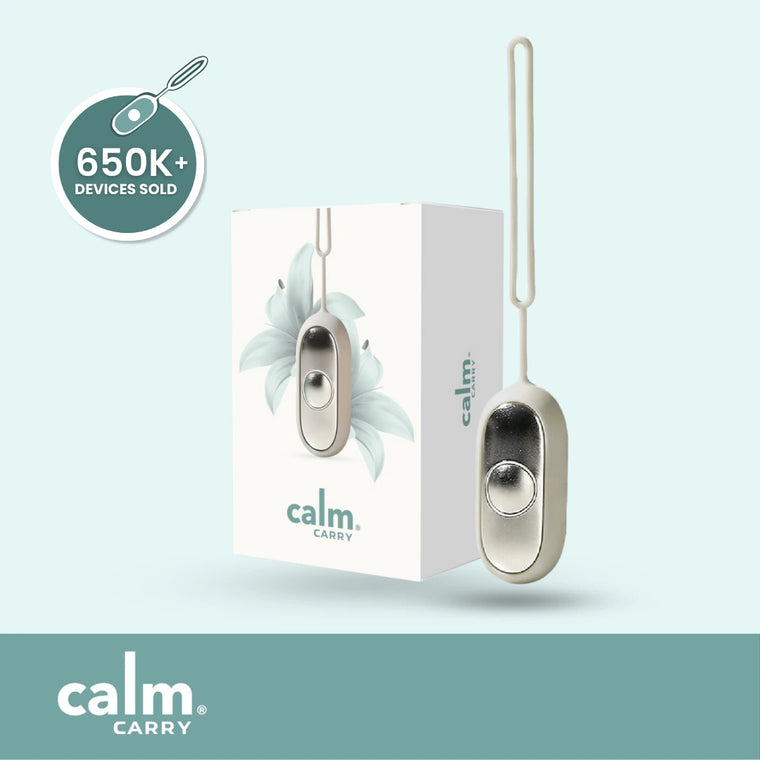
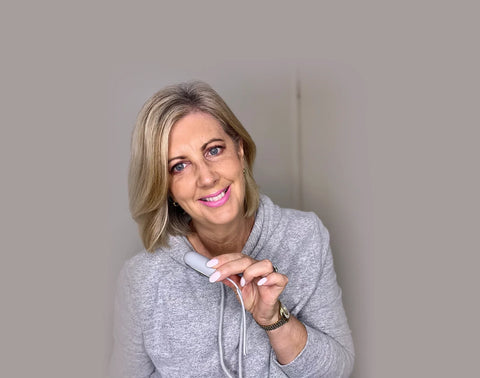
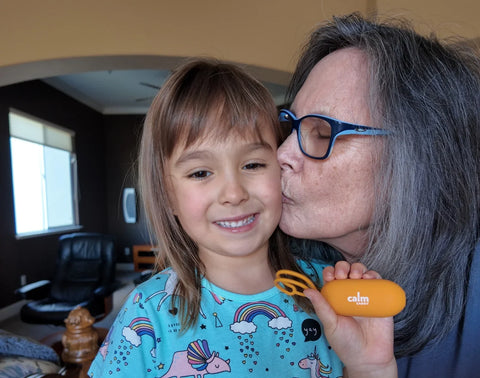
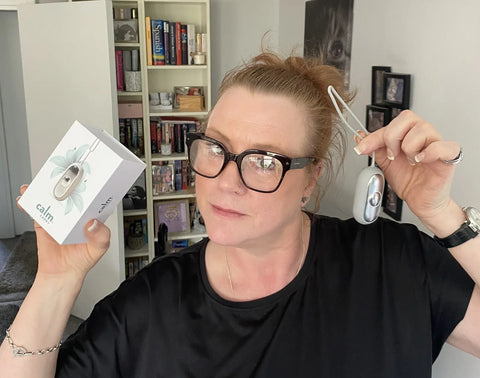
CalmCarry sits in your palm and gives a soft pulse, like a tiny heartbeat, against the PC8 point in the centre of the hand, a spot used in acupressure tradition for over a thousand years. The value is that it is something to hold and focus on, discreetly, wherever you are: at a desk between meetings, in a waiting room, on a plane. It is a comfort tool rather than a medicine, it is recommended by therapists, and over 650,000 families keep one to hand. Users rate the brand 4.9 out of 5. Our honest look at the acupressure evidence lays out what the research does and does not show, and our explainer on the Lao Gong palm point shows exactly where it sits and how to press it yourself.

Where it falls short: it is a tool, not a routine. If your evenings are wall-to-wall screens and late caffeine, fix that first and the tool will do more.
2. Long-exhale breathing
Free, portable, and the best-evidenced item on this list. The pattern that suits most people is a slow inhale through the nose and a longer exhale, roughly twice the length, repeated for a minute or two. The long exhale is the active ingredient. It works in a meeting, in traffic, and at 2am, which is exactly why it beats anything you have to carry.
3. A weighted blanket
Steady, even pressure across the body settles a lot of people for reading or sleep. Choose roughly ten percent of your body weight, and treat it as a wind-down layer rather than something to sleep under all night in warm weather. Not for everyone: some find the weight confining, so borrow one before you buy if you can.
4. A proper wind-down hour
Not a product, and the highest-leverage change most adults can make. Screens off or dimmed an hour before bed, lights low, and the same short sequence every night so your body reads the cue. Adults often build careful bedtime routines for their children and give themselves none. Whatever tool you choose, it works better inside one, and we have mapped out where a device fits inside that hour.
5. A fidget or worry object
A smooth stone, a worry ring, a textured coin. The point is a small repetitive action for your hands during the moments that call for stillness elsewhere: a difficult call, a delayed flight. Cheap, silent, and easy to keep in a pocket. Choose one thing and keep it in the same pocket so you always know where it is. On the days you have nothing to hand, there are nine things to do with your hands that need no object at all.
6. Sound: white noise or a familiar playlist
Consistent, unremarkable sound covers the small noises that keep an alert brain busy. White noise machines work, but so does the same low playlist every night; the consistency matters more than the content. Avoid anything with lyrics you will follow or podcasts that make you think.
7. Getting outside, briefly
Ten minutes of daylight and movement, ideally in the morning, does more for evening calm than most things you can buy. It anchors your body clock and takes the edge off a wound-up day. Free, and the one on this list people skip most.

How to choose
- Attach the tool to a moment. The device during the commute, breathing before meetings, the blanket with the evening read. A long journey is the clearest case of all, which is why we made a separate list of what to pack for a long flight. Tools without a moment end up in drawers.
- One at a time. Adding four things at once tells you nothing about what helped.
- Discreet matters more than clever. If you would not use it in front of colleagues, you will not use it when you need it.
- Be sceptical of big promises, ours included. These are tools for taking the edge off a moment, not treatments. Persistent stress, low mood or sleep trouble is a GP conversation, and no gadget substitutes for it.
Common questions
What is the best calming tool for work?
Something discreet and hand-held, paired with long-exhale breathing you can do at your desk without anyone noticing. Bulky or noisy tools do not survive contact with an actual office. We have rated which hand techniques stay discreet in a meeting, on a video call and at a desk.
Do calming devices actually work?
They work as anchors: something to hold and focus on while a moment passes. That is a real and useful effect, and it is different from treating anything. Pair one with a routine and it earns its place; expect it to fix stress on its own and it will disappoint. For sleep specifically the answer needs more caveats, and we have set out what the evidence on calming devices and sleep actually shows.
What can I use at 3am when I cannot sleep?
Keep it boring and non-stimulating: long exhales, a hand tool, low consistent sound, and no phone. If waking at night is a regular pattern rather than an occasional one, that is worth raising with your GP.