

This article is general information, not medical advice. Nothing here is a treatment for any condition. If you have a heart, circulation or breathing condition, or if long journeys are consistently distressing for you rather than simply uncomfortable, talk to your GP before you fly.
What to pack for a long flight when you don't travel well comes down to covering four things: the noise, the light, the hours with nothing to do with your hands, and the fact that you cannot get up whenever you feel like it. The nine items below cover all four, two of them cost nothing, and most of the rest are already in the house. Pack for the hours in the seat rather than for the destination, and a fourteen-hour flight stops being one long block you have to survive and becomes five or six shorter ones you have a plan for.
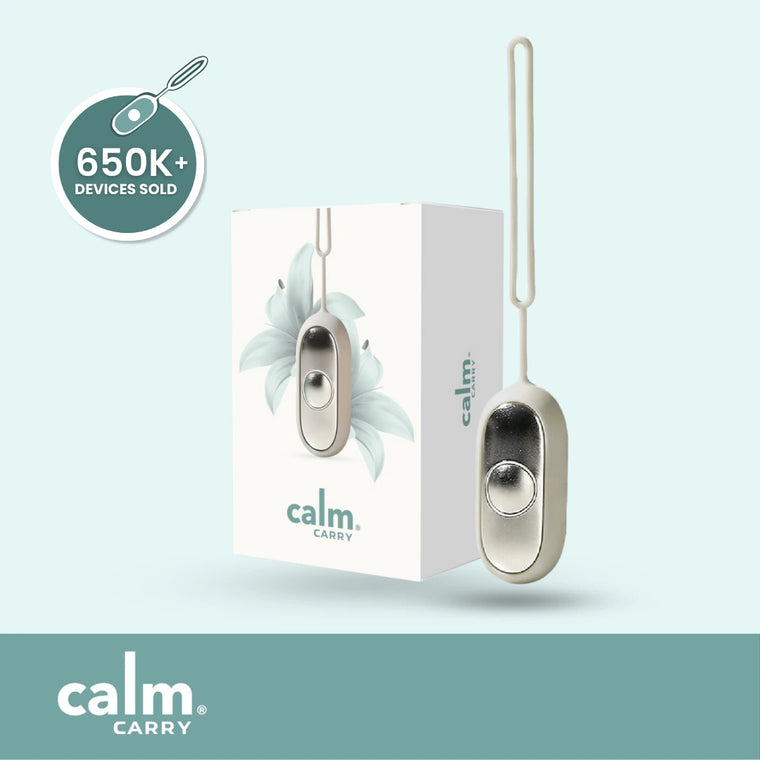
We make CalmCarry, a hand-held calming device for adults, and it is one of the nine. That is declared here rather than buried at the bottom. The free and cheap items come first because they do more of the work, and we have tried to be straight about what each one is actually for and where it is not worth the money. This is written by the Glowco team, who have shipped CalmCarry to more than 650,000 families and hold a rating of 4.9 out of 5 across roughly 1,219 verified reviews.
The short list, if you are packing tonight
Nine things, in the order they earn their space: noise-cancelling headphones, foam earplugs, an eye mask, a refillable water bottle, a snack you would actually eat at home, neck support, something small for your hands, long-exhale breathing, and a plan to get up and walk once an hour. Everything below explains why.

If you only have room for three, take the earplugs, the eye mask and the water bottle. They are the cheapest, the smallest, and they fix the three things that make a long flight feel longer than it is.
What to pack for the noise and the light
A plane cabin is loud and lit at the wrong times, and both wear you down without you noticing. Cutting the constant engine roar and controlling when your eyes see light are the two highest-value changes you can make to a long flight, and neither of them requires any skill or preparation on your part.
1. Noise-cancelling headphones. This is the one place where the expensive version genuinely earns its price. Active noise cancelling works best on exactly the kind of sound a jet makes, a constant low broadband roar, and cutting it removes a background pressure you had stopped registering. Any pair will do the job. If you already own them, they go in the bag first. If you do not, borrow before you buy, because the fit around your ears matters more than the brand on the box.
2. Foam earplugs. They cost almost nothing a pair, and they solve the problems headphones do not. They work when the battery dies, they work when you want to lie against the window, and they work at three in the morning when a headband is the last thing you want on your head. Take two pairs, because one will end up on the cabin floor. Roll them thin, hold them in place for twenty seconds while they expand, and they will actually seal.
3. An eye mask. Judge an eye mask on the seal, not the padding. The expensive contoured ones are worth it only if they sit flat against the bridge of your nose without pressing on your eyelids. Cabin lights come up for meal services at times that have nothing to do with where you are going, and being able to decide when your own night starts is worth more on a long flight than almost anything else you can pack.
What to pack for your body in the seat
Most of what makes a long flight physically miserable is dehydration, sitting still, and food you did not choose. None of that needs expensive kit. It needs a bottle, a snack, something that holds your head, and a rule about getting up that you actually keep to.
4. A refillable water bottle. Empty it before security, fill it after, and keep filling it. Cabin air is very dry, and the drinks trolley comes round far less often than you will want. Having your own bottle at your feet means you stop rationing sips and you stop waiting for someone else. It also means you get up more, which is the next item.
5. A snack you would actually eat at home. Airline meals arrive on the airline's schedule and are frequently the thing that finally tips a long journey into misery. One snack you genuinely like, packed by you, is worth more than any amount of resigned tray food. Keep it in the seat pocket rather than the overhead locker or you will not bother.
6. Neck support that holds your head. Most travel pillows hold your neck and let your head fall forward anyway, which is why you wake up with a crick and no rest. The ones that work stop your head from tipping sideways or forward, either by being firm enough to wedge against the seat or by fastening at the front. Test it on a sofa before you buy it. If your head still falls, it will still fall at 38,000 feet.
7. Get up and walk, once an hour. This one is free and it is the item people skip. The NHS guidance on journeys of four hours or more is to drink plenty of water, avoid alcohol, wear loose clothing and walk around when you can, and more generally not to sit still for long stretches. If you have had a clot before, that is a conversation with your GP well before you fly rather than a packing decision. Book the aisle if a long flight is the thing you dread. It usually costs a little more and it removes the single biggest reason people sit still for nine hours.
What to give your hands to do
The hours that drag on a long flight are the ones where there is nothing to do with your hands and nowhere to put your attention. A screen only covers part of it, because films end and the last hour before landing is usually the one that feels longest. Two things help here, and one of them costs nothing.
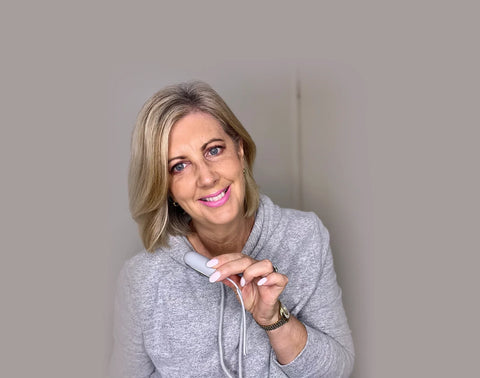
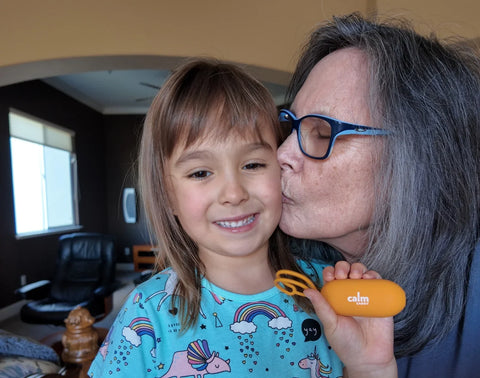
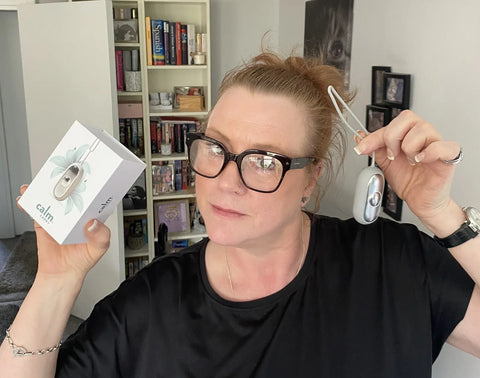
8. Something small and repetitive for your hands. A worry stone, a set of beads, a ring you turn, or a hand-held device. Ours is CalmCarry. It sits in your palm and gives a soft pulse, like a tiny heartbeat, against PC8 or Lao Gong, the point at the centre of the palm that acupressure tradition has used for more than a thousand years. It uses a very low microcurrent, felt as a soft pulse rather than a vibration, with eight levels so you can start gently. It is small enough to close your hand around, so it works in a seat without announcing itself, and it comes with free accessories, a covers five-pack and our e-book. It is recommended by therapists as part of a calming routine. Plenty of people get the same benefit from a smooth stone in a pocket, and if that is you, keep the money.
9. Long-exhale breathing. Free, needs nothing packed, and works in the seat without anyone noticing. Breathe in for a count of four, out for a count of six or eight, and repeat for a couple of minutes. The only rule that matters is that the out-breath is longer than the in-breath. It is the single most useful thing on this list for the ten minutes before wheels-up and the ten minutes before wheels-down, because those are the moments when you cannot reach a bag anyway.
For the wider picture beyond travel, our round-up of calming tools for adults covers the same ground for ordinary days, there are more ideas for restless hands that need nothing packed at all, and there is more detail on the palm point itself in our guide to the PC8 point in the palm.
Travel wristbands target a different point
Travel sickness wristbands and CalmCarry are not the same product doing the same job, and the confusion is common enough to be worth spelling out. The bands press on PC6, sometimes written P6 and also called Neiguan, on the inner forearm a couple of finger-widths above the wrist crease. That is the point associated with nausea. CalmCarry sits over PC8, in the centre of the palm.

Different points, different traditions, different purposes. If the thing you struggle with on a journey is your stomach, a wristband is the product built for that and we are not it. If it is the hours in the seat and wanting something to hold, that is what a palm device is for. Both are traditional acupressure rather than proven medicine, and it is worth reading what the evidence on acupressure actually says before you spend money on either.
How to pack it so you can reach it
This is the part most packing lists skip, and it is where the list either works or sits uselessly in an overhead locker for nine hours. Split everything into two piles before you leave the house: what you will want without standing up, and what you will want once. Only the first pile travels within arm's reach.
- Seat pocket, in this order: earplugs, eye mask, the thing for your hands, your snack, phone, and a short charging cable. That is it. Six items, all flat, all findable in the dark.
- Under the seat in front: the water bottle and a paperback or puzzle book. Reachable with a stretch, not worth the seat pocket.
- Overhead locker: everything else. Spare layer, wash bag, the second charger, the things you will get up for anyway.
- The test: if getting it out means asking two people to move, it is in the wrong bag.
Then think about the flight as five moments rather than one block. The gate wait, where a walk and a filled bottle do most of the work. Taxi and climb, where devices are stowed and long-exhale breathing is the only tool you are allowed. The long middle, which is what the headphones and the eye mask are for. The hour you cannot sleep, which is the hardest one and the reason something for your hands is worth packing. And descent, where you are strapped in again and back to breathing. Nothing on the list has to cover all five. Each item only has to cover one of them well.
One more small thing that makes a disproportionate difference: put the eye mask on your knee before take-off rather than into the seat pocket. Seat pockets are where things go to be forgotten, and the moment you actually want an eye mask is usually the moment you are least willing to go looking for one.
What we would leave at home
- A neck pillow that fails the sofa test. Bulky, awkward to carry, and useless if your head still falls forward. Better to take none and use a rolled jumper against the window.
- One long film as the whole plan. It ends, usually with four hours left. Have several short things instead, and download them before you leave home rather than trusting the seat-back system.
- Anything that needs a cable you did not pack. If the charger is in the locker, the device is decorative.
- A giant airport water bottle you paid for. Fill your own after security. The bottle is the point, not the water.
- Sleeping tablets you have not taken before. A long flight is a poor place to find out how something affects you. That is a conversation with your GP or pharmacist well before you travel, not a decision at the gate.
Who this list is not for
- Anyone whose main problem is nausea. This list is built around noise, light, hands and sitting still. Motion sickness is a different problem with different products, and a pharmacist is the right first stop.
- People flying with small children. The maths changes completely when you are managing someone else's hours as well as your own, because you end up packing for their attention span rather than yours. Our companion guide to flying with a restless child covers the car seats, the snack timing and the hour-by-hour plan that version of the problem needs.
- Anyone who genuinely sleeps on planes. If you are out before the seatbelt sign, take the eye mask and the earplugs and ignore the rest.
- Short-haul travellers. Under about four hours, a bottle of water and headphones is the whole list, and everything else is carrying weight for no reason.
- Anyone for whom travel is consistently distressing rather than uncomfortable. Nothing on this list is a substitute for talking to your GP, and no object on a packing list is meant to be.
Long flight questions people ask
What should I pack for a 14 hour flight if I don't travel well?
The same nine items, plus a spare pair of earplugs and one extra snack. The difference at fourteen hours is not what you pack but how you break it up, so plan a walk every hour and treat each stretch as its own short journey rather than counting down the whole thing.
Do noise-cancelling headphones really make a difference on a plane?
More than almost anything else you can buy for the purpose. Active cancelling is at its best on exactly the constant low roar a jet produces. Foam earplugs are a fraction of the price and get you most of the way there, which is why both are on the list.
Are travel sickness wristbands and CalmCarry the same thing?
No. Wristbands press on PC6, or Neiguan, on the inner forearm, which is the point associated with nausea. CalmCarry sits over PC8, or Lao Gong, at the centre of the palm. Different points, different jobs, and if your problem is your stomach the wristband is the one built for it.
What can I do with my hands on a long flight?
Something small and repetitive is the honest answer: beads, a smooth stone, a ring you turn, a puzzle book, or a hand-held device. Screens cover part of it, but the last hour before landing is usually the one that drags, and by then most people have run out of film.
How do I get comfortable in economy on a long haul flight?
Book the aisle if you dread the flight and the window if you plan to sleep, keep your own water at your feet, get up once an hour, and control the light with an eye mask rather than hoping the cabin crew agree with you about when night is.
Start with the pile that fits in a seat pocket. Earplugs, an eye mask, something for your hands, a snack and your own water will do more for the next long flight than anything you could buy at the airport. If the part you find hardest is the hour with nothing to hold, CalmCarry for adults was built for exactly that hour.